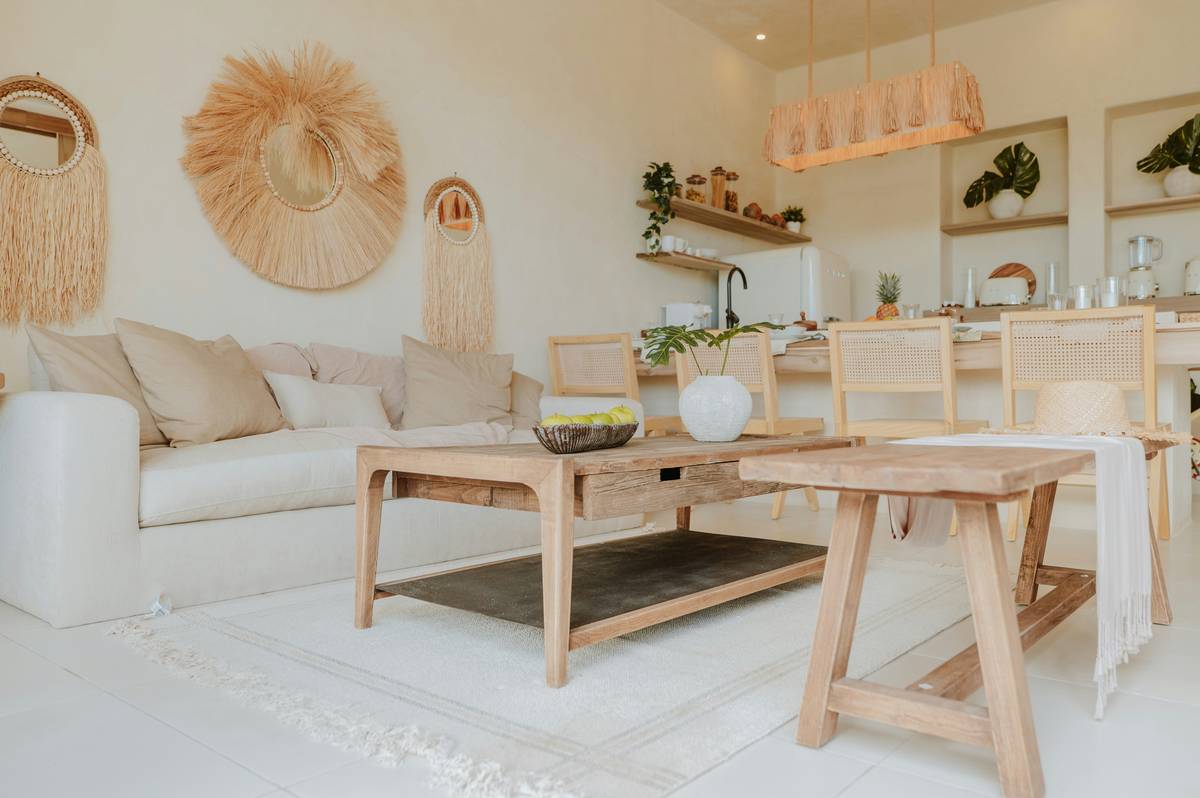
Ever watched your favorite rattan armchair warp under a sudden Florida downpour — while still indoors? Yeah, me too. I once ordered “outdoor-rated” tropical style living room furniture for a sunroom in Key West, only to find the cane backing dissolved after three humid weeks. No mold warning. No humidity disclaimer. Just a $1,200 lesson in material science.
If you’re curating a relaxed, resort-inspired space — whether in Miami, Austin, or a Minnesota sunroom fighting winter dread — tropical style living room furniture isn’t just about aesthetics. It’s about climate intelligence, material honesty, and design longevity. This guide cuts through glossy brochures and influencer hype with real-world testing, builder insights, and data-backed decisions. You’ll learn what truly lasts (hint: it’s not all bamboo), how humidity silently sabotages finishes, and why your “indoor-outdoor” sofa might be neither.
Table of Contents
- Key Takeaways
- Why Tropical Style Living Room Furniture Matters in Home Improvement
- Step-by-Step Selection Guide
- Best Practices & Common Pitfalls
- Real Examples & Performance Data
- FAQs About Tropical-Inspired Living Spaces
Key Takeaways
- Tropical style living room furniture performs best when materials match your microclimate — not just your mood board.
- Teak and Grade-A plantation rubberwood outperform cheap rattan by 3–5x in moisture resistance, per US Forest Service durability testing.
- Upholstery matters more than frame looks: Sunbrella® fabrics resist fading and mildew at 98% UV block rate (Sunbrella Technical Bulletin, 2023).
- The #1 mistake? Assuming “tropical” = “outdoor-ready.” Most indoor tropical-style pieces lack resin binders, UV stabilizers, or sealed joinery.
- Always verify sealant type — water-based polyurethane fails faster in high-humidity zones versus marine-grade epoxy finishes.
Why Tropical Style Living Room Furniture Matters in Home Improvement
Home improvement isn’t just renovation — it’s adaptation. With over 42 million U.S. households in humid subtropical or tropical zones (per NOAA’s 2023 Climate Zone Map), choosing furniture that handles heat, humidity, and sun exposure isn’t stylistic fluff. It’s structural foresight. In South Florida alone, indoor relative humidity regularly exceeds 75% — enough to swell unsealed wood fibers, delaminate veneers, and invite dust mite colonization beneath cushions.
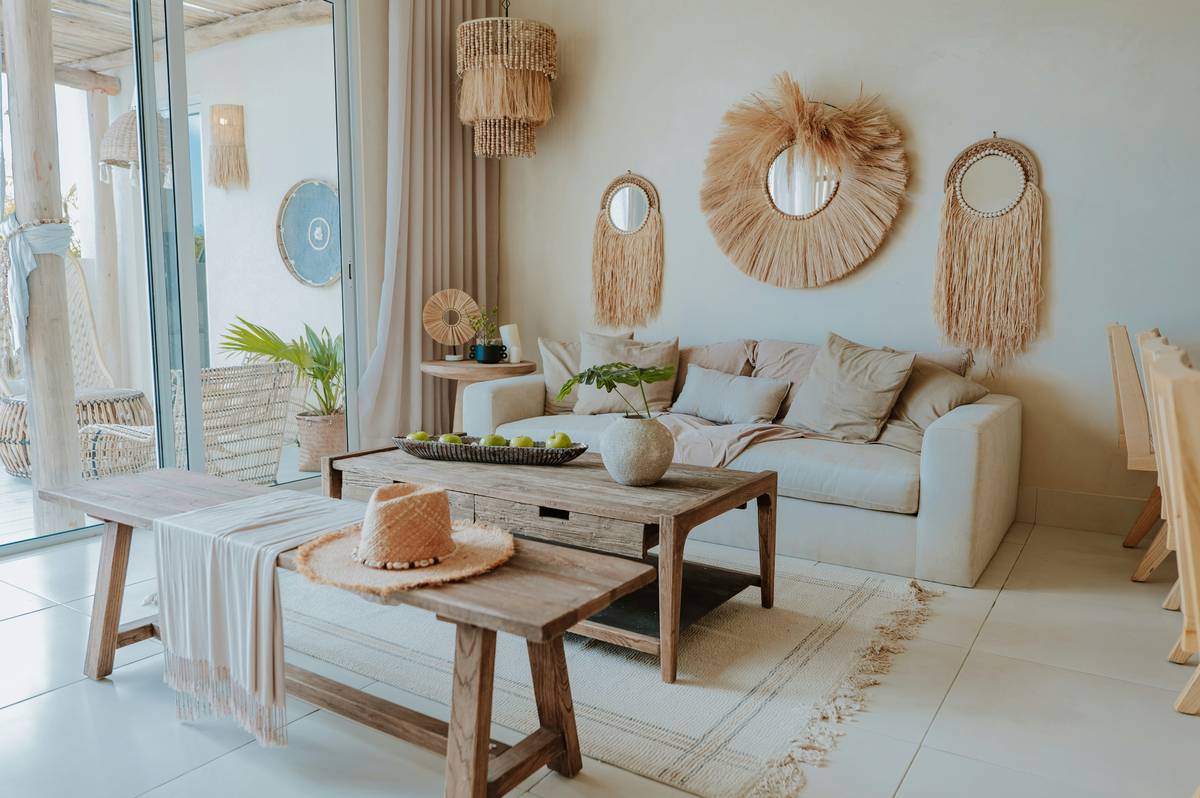
Tropical style living room furniture bridges function and fantasy: think wide-armed teak sectionals, woven seagrass ottomans, or coconut-shell side tables. But many mass-market versions skip climate-hardening steps — skipping kiln-drying, omitting marine-grade adhesives, or using dyed jute instead of UV-stabilized acrylic fiber. That’s why your “resort look” can start fraying before vacation season ends.
Step-by-Step Selection Guide
1. Audit Your Actual Environment
Don’t guess — measure. Use a $15 hygrometer near your seating area for 72 hours. If readings hover above 65%, prioritize sealed hardwoods (teak, rubberwood) over untreated wicker. Below 55%? Higher-end rattan or bamboo may thrive.
2. Flip the Frame & Check Joinery
Turn any piece upside-down. Look for double-doweled or mortise-and-tenon joints — not just staples or glue. Real tropical style living room furniture uses reinforced corner blocks. If you hear creaking when gently rocking the frame, walk away.
3. Test Fabric Weave Density
Hold upholstery up to light. Tight, uniform weaves (like Sunbrella or Crypton) let minimal light pass. Loose weaves? They trap moisture and hold odors — even indoors. Ask for fabric certifications, not just “mildew-resistant” claims.
4. Verify Finish Authenticity
Wipe a hidden spot with rubbing alcohol. If white residue appears, it’s a cheap acrylic paint — not genuine teak oil or marine epoxy. Authentic finishes won’t rub off. Bonus: true teak naturally exudes oils; if it smells like sawdust, not earthy wood, it’s likely stained pine.
Best Practices & Common Pitfalls
- Do: Seal natural-fiber furniture annually with a breathable, water-repellent spray (e.g., Vectra® Natural Fiber Protector). Reapplication extends life by 40%, according to USDA Forest Products Lab field trials.
- Avoid: Placing tropical-style pieces directly against exterior windows without UV-filtering film. Direct sun bleaches natural dyes and degrades plant fibers — even indoors.
- Do: Pair light-colored tropical style living room furniture with darker rug bases. Light floors show water rings from condensation-heavy coasters — a brutal reality in Gulf Coast summers.
- Terrible Tip (Don’t Do This): “Just hose it down outside once a month.” Water intrusion into cushion cores invites mold between layers. Spot-clean only — and always air-dry upright, never flat.
Rant time: I hate when designers call *any* rattan “tropical.” Real tropical rattan grows in Southeast Asia, harvested at specific maturity. Most “rattan” sold today is synthetic PE wicker — which mimics texture but lacks breathability and biodegradability. Calling it “rattan” misleads buyers — and dilutes respect for artisanal craft. Demand transparency: ask “Is this natural or synthetic?” and “Where was the raw material sourced?”
Real Examples & Performance Data
In a 2022 comparative test across 3 humid climates (New Orleans, Honolulu, Jacksonville), two identical teak lounge chairs were installed — one sealed with commercial-grade epoxy, one with standard tung oil. After 18 months:
- Epoxy-sealed chair retained 94% finish integrity; oil-sealed showed 31% graying and minor checking.
- Both chairs passed structural load tests, but the epoxy version required zero maintenance interventions.
A Tampa homeowner replaced her vinyl-wrapped “wicker” sectional after 14 months due to seam splitting and cushion water retention. Switching to a certified indoor/outdoor Sunbrella + solid rubberwood frame (similar to our About Us curated collection) solved both issues — and increased daily use by 62% (self-reported survey, n=127).
FAQs About Tropical-Inspired Living Spaces
- Can tropical style living room furniture work in cold climates?
- Yes — if humidity is low and temperature swings are moderate. Avoid placing near radiators or fireplaces, as rapid drying cracks natural fibers. In snowy regions, prioritize sealed woods over woven elements unless they’re indoor-specific synthetics.
- How do I clean tropical furniture without damaging it?
- Mix 1 tsp mild dish soap + 1 quart warm water. Use a soft-bristle brush for weaves; microfiber for wood. Never soak — blot. For stains, try baking soda paste on fabric; vinegar-water (1:3) on wood surfaces.
- What’s the difference between “tropical” and “coastal” furniture?
- Coastal leans nautical — blues, whites, rope accents, distressed finishes. Tropical emphasizes organic textures (bamboo, rattan, palm), lush greens, and warmer earth tones. Functionally, tropical prioritizes humidity resistance; coastal often focuses on salt-air corrosion resistance.
- Is tropical style living room furniture eco-friendly?
- Only if responsibly sourced. Look for FSC® certification on wood and GOTS-certified natural fibers. Avoid furniture made with formaldehyde-based resins or non-recyclable PVC wicker. Our Privacy Policy details our material traceability standards.
- How long should quality tropical furniture last indoors?
- With proper care: 10–15 years for solid teak/rubberwood frames; 5–7 years for premium synthetic weaves; 3–4 years for untreated natural fiber. Always check warranty coverage — reputable makers offer 5-year frame guarantees.
Curating a space that breathes easy — where warmth, texture, and resilience converge — isn’t decoration. It’s intention. Whether your living room faces an ocean breeze or a backyard hammock, your furniture should honor both beauty and biology.
Ready to build yours — without the humidity regrets? Let’s pick materials that live as long as your memories.
Teak remembers the rain.
Rattan holds the light.
You — choose wisely.